Plečnik’s Traces in Prekmurje: The White Dove and Beyond
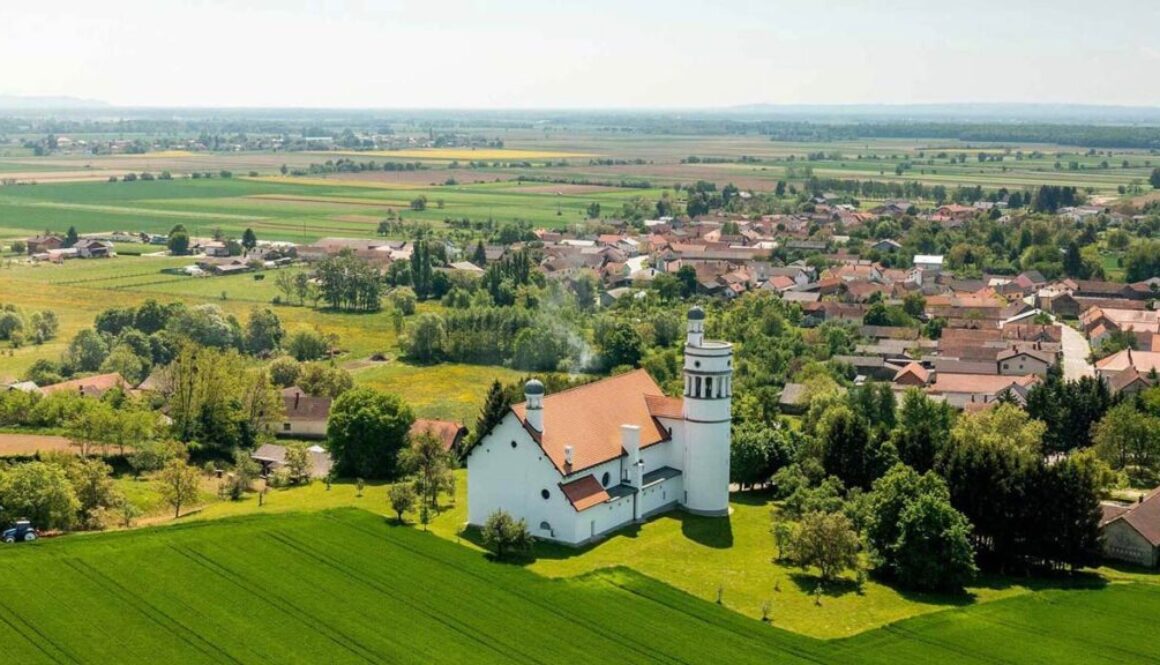
Are you fascinated by sacred architecture that weaves local tradition with modernist innovation? Or a traveler exploring Slovenia’s hidden regions, or a church enthusiast seeking spiritual havens off the beaten path? In the northeastern region of Prekmurje, the works of Jože Plečnik offer a captivating journey through history and design. At the heart is the Church of the Lord’s Ascension in Bogojina, affectionately known as the “White Dove” (Bela golobica), a modernist masterpiece that blends Gothic roots with Pannonian influences. But Plečnik’s legacy extends further—discover interiors, altars, and memorials that symbolize the region’s cultural integration into Slovenia. Perfect for architects, pilgrims, and tourists, these sites promise serene beauty and profound insights.
A Brief History of Plečnik's Prekmurje Legacy
Plečnik’s connection to Prekmurje began in 1924, shortly after the region’s annexation to Slovenia, through a fortuitous encounter. His student Jožef Bajlec from Bogojina, supported by local priest Ivan Baša, commissioned plans for a new church to replace a small 14th-century Gothic structure. Plečnik, already renowned from his work in Prague and Vienna, visited Bogojina and ingeniously incorporated the old church as an atrium for the new one. Construction of the Church of the Lord’s Ascension spanned 1925-1927, with interiors completed post-World War II and final details added after Plečnik’s death in 1957.
This project opened doors to more commissions from Prekmurje’s clergy, resulting in redesigns and memorials. Art historian Janez Balažic notes that Plečnik symbolically “Slovenized” Prekmurje by merging Central European and ancient Pannonian elements. Though some plans, like a chapel for Baša, remained unbuilt, these works highlight Plečnik’s adaptability during interwar times and his lasting impact on the region’s identity.
Architectural Highlights: Fusion of Tradition and Modernity
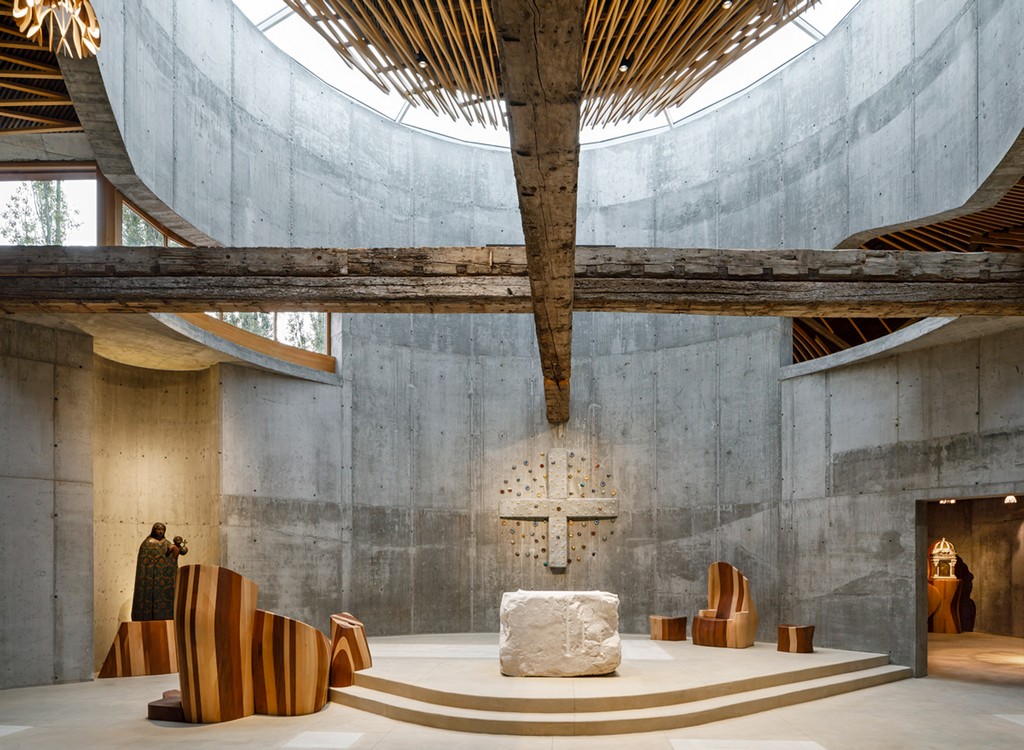
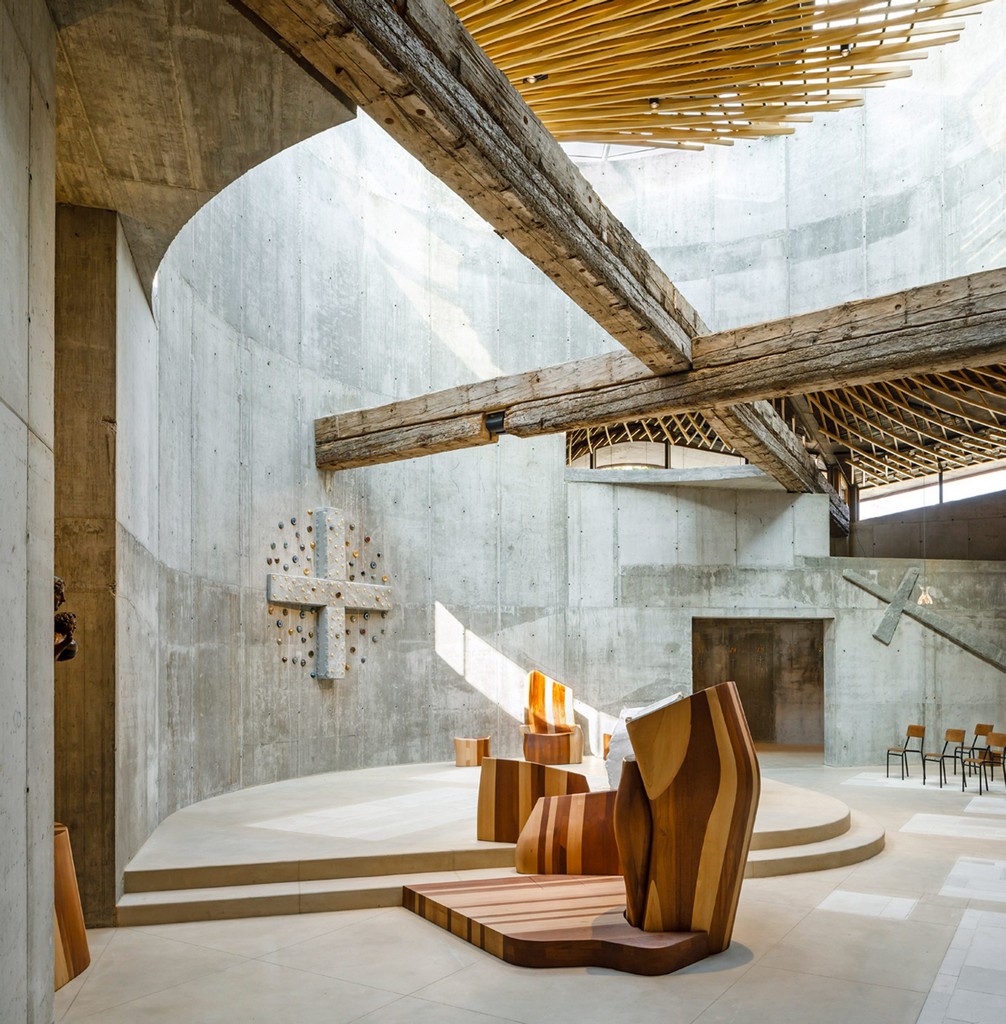
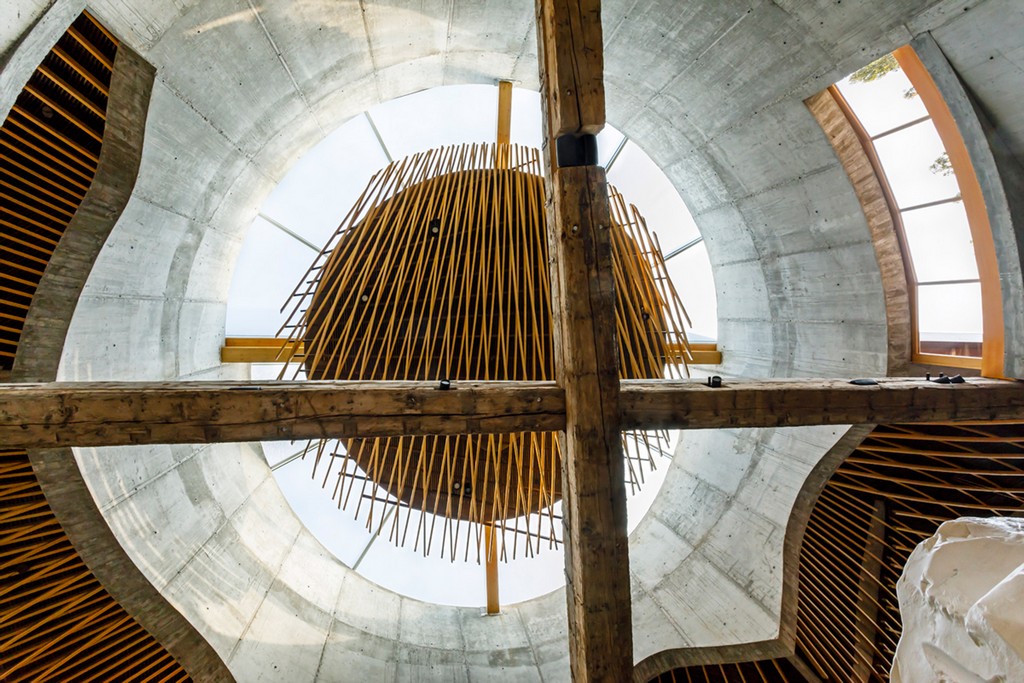
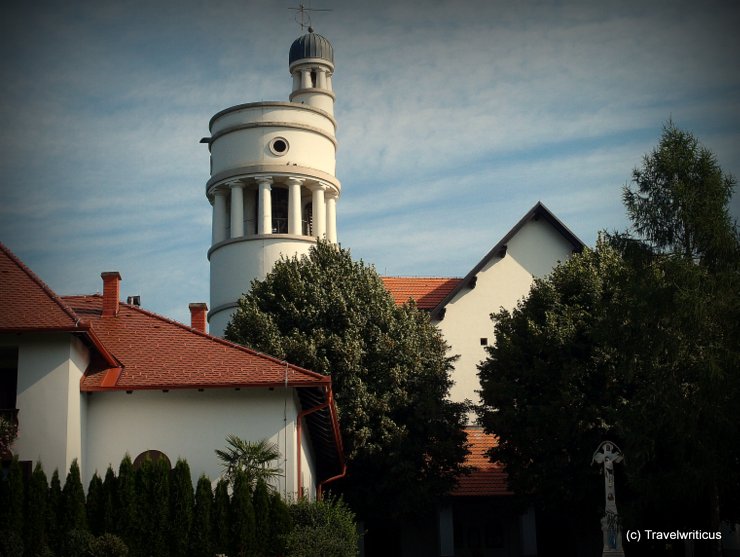
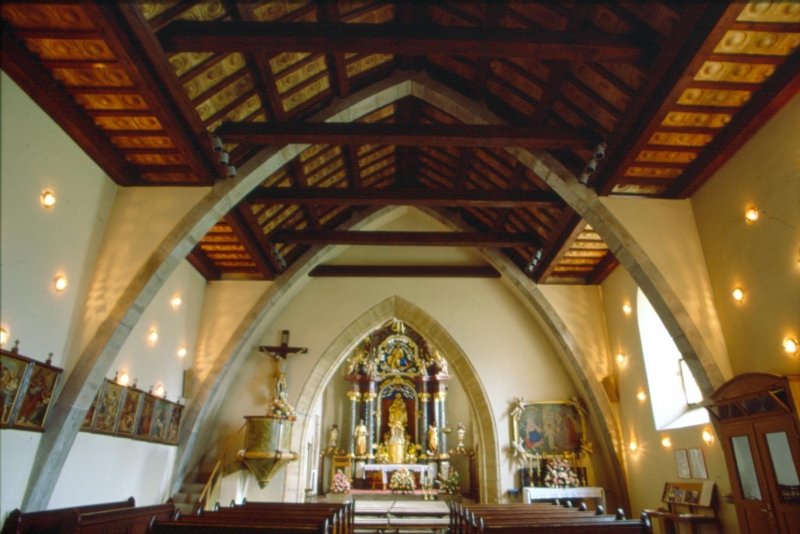
The Church in Bogojina stands as Plečnik’s crowning achievement in Prekmurje, often hailed as one of Slovenia’s premier modern sacral buildings. Its exterior features a striking cylindrical bell tower, sometimes likened to a “sauerkraut barrel” by locals, while the interior boasts a wooden ceiling decorated with ceramic plates crafted by local potters in 1930. The main wooden altar and furnishings, designed by Plečnik, emphasize sustainability and regional craftsmanship.
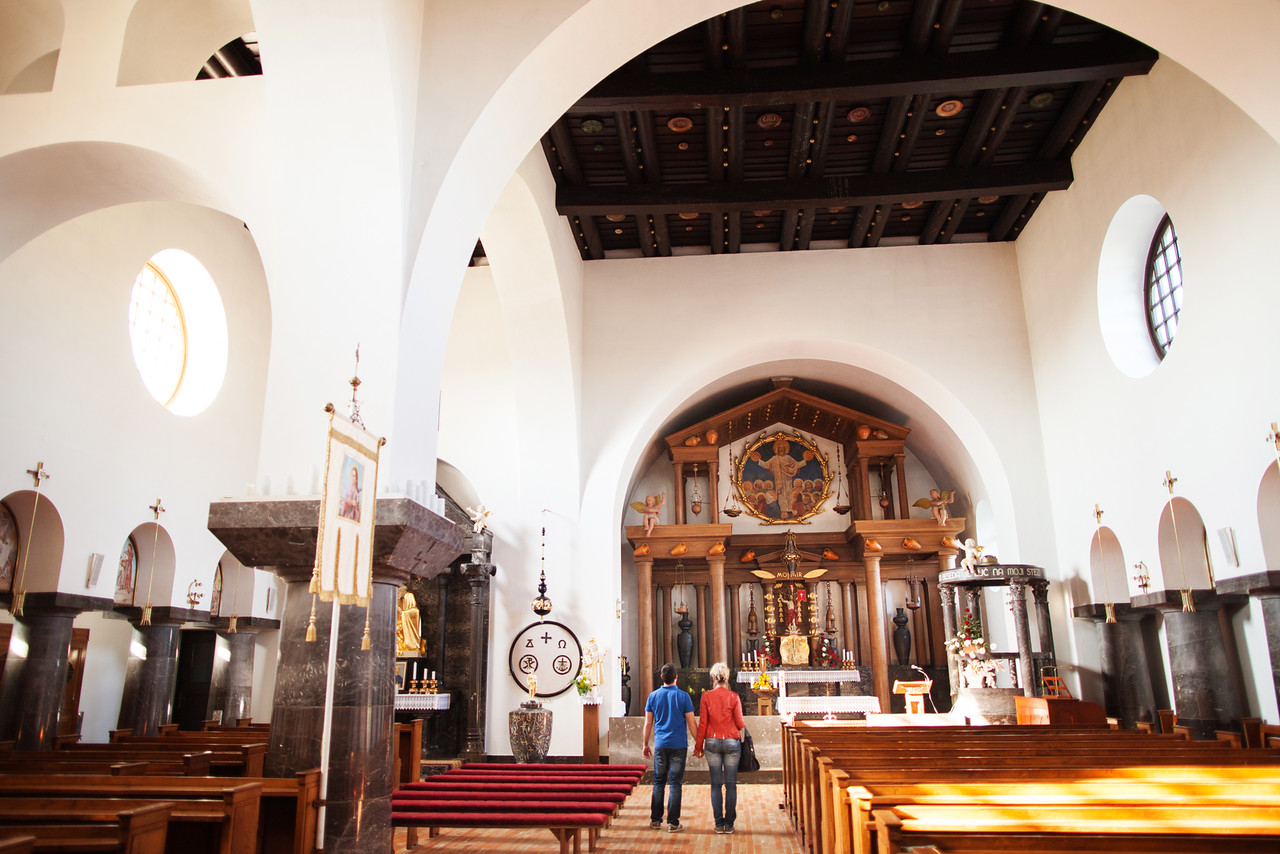
Other notable works include the interior redesign of the Church of the Assumption at Grad na Goričkem in the 1950s, where Plečnik introduced pointed arches mimicking Gothic styles and a wooden ceiling with ceramic inserts, echoing Bogojina’s theme but uniquely adapted. In Martjanci, he designed the main altar for the Church of St. Martin and a gravestone for priest Jožef Horvat in 1932. Nearby in Bratonci, a memorial for folk collector Štefan Kühar further showcases his memorial architecture. These elements draw from Gothic traditions, Pannonian heritage, and Plečnik’s signature humanism, making them essential studies for sacral architecture aficionados.
For photographers, the minimalist exteriors and warm, light-filled interiors provide endless inspiration, especially in the flat Pannonian landscapes.
Why Visit? For Architects, Church Lovers, and Tourists
Sacral architecture enthusiasts will find Bogojina a prime example of Plečnik’s human-centered design, integrating history with innovation in a remote setting. It’s a must for studying modernist adaptations of traditional forms.
Church lovers appreciate the spiritual serenity—dedicated to the Lord’s Ascension, it hosts masses and welcomes pilgrims in a peaceful, open atmosphere with no entrance fee, just voluntary donations. The church attracts around 30,000 visitors annually, including architects and even international dignitaries.
Tourists can tour multiple sites in one day: Start in Bogojina (open from morning mass to 5 PM; keys available from neighbors if needed), then visit Grad na Goričkem, Martjanci, and Bratonci. Combine with Prekmurje’s culinary delights or nature walks in Goričko Landscape Park. Pro tip: Visit in spring for blooming fields or autumn for golden hues enhancing the white facades.
Whether on a Plečnik pilgrimage or a regional adventure, Prekmurje’s treasures offer an enriching escape. Head to Bogojina and trace the architect’s footsteps across this enchanting Slovenian corner.